
Case study · WordPress and WooCommerce · Built from scratch
Workshop.nl
Workshop.nl is a Dutch marketplace where independent hosts list, sell and manage their own classes rather than a single retailer selling stock. We built the platform on WordPress and WooCommerce, covering vendor onboarding, ticketed booking, payment handling, a seller dashboard, and direct messaging between a host and the person booking.
| Platform | Engagement | Industry | Region | Live site |
|---|---|---|---|---|
| WordPress and WooCommerce | Built from scratch | Workshop and experience marketplace | Netherlands | workshop.nl |
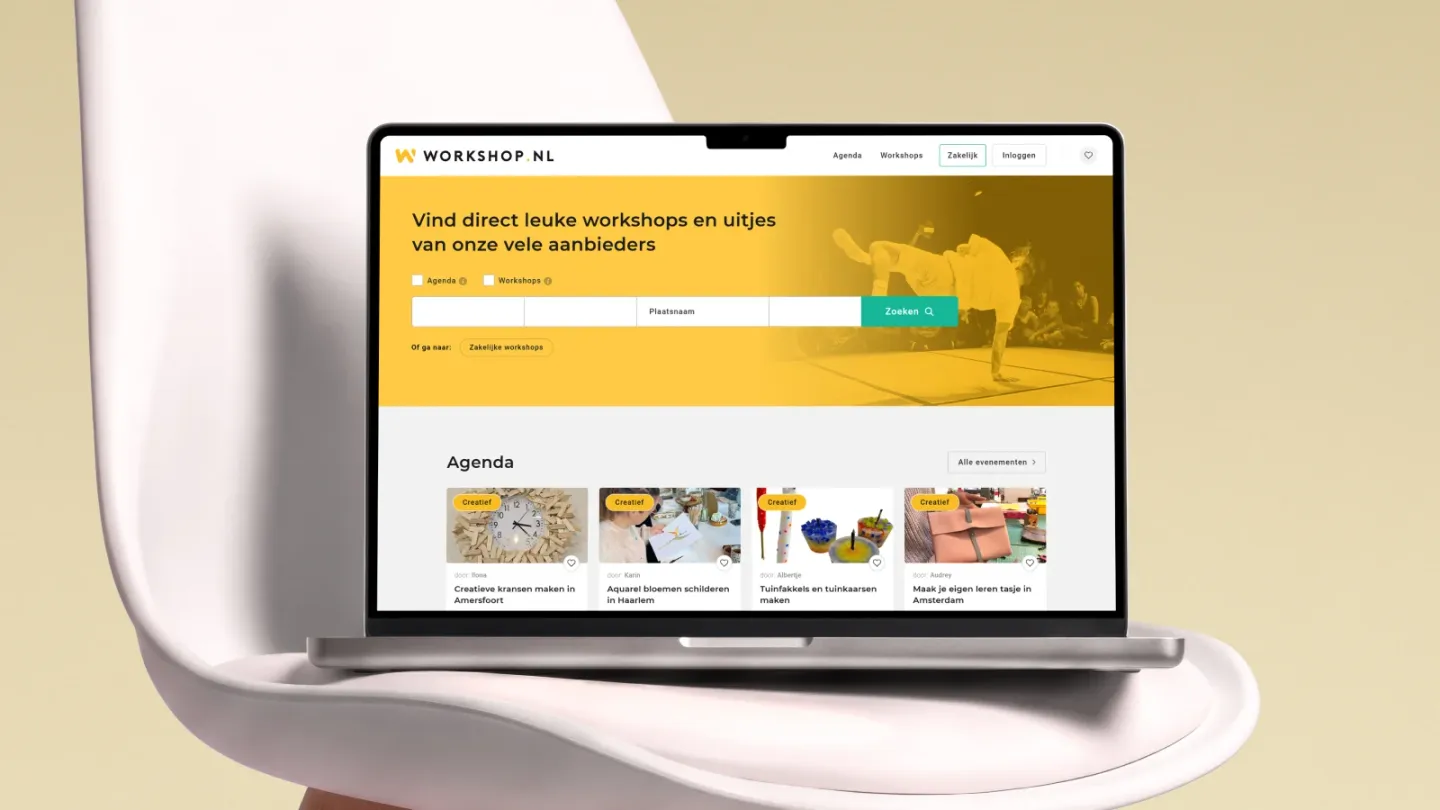
The storefront
The Workshop.nl store as it runs today, at workshop.nl. Screens change; this page describes the build rather than the current merchandising.
Open live siteThe challenge
A marketplace has to be sold twice before it works once. A host will not list a class until people are browsing, and nobody browses a listings page with four classes on it, so the first version has to feel worth using while it is still nearly empty and still give a host a reason to do the work of listing.
An experience is also not stock. It happens at one time, in one room, with a fixed number of seats, and it cannot be back-ordered or dispatched late. Every booking is final in a way an order for a physical product is not, across hundreds of independent sellers who each set their own dates.
The approach
We built it as a multi-vendor platform rather than as one shop with several suppliers behind it, which is a larger decision than it looks. Each host has their own dashboard, sets their own dates and seat counts, and answers their own customers, so the operational cost of adding another workshop sits with the person who wants it listed rather than with the marketplace.
WooCommerce handles the transaction. The scheduling, the seat inventory and the separation between vendors are the parts that had to be built around it, because a product that expires at 19:00 on a Thursday is not a product WooCommerce ships knowing about. Messaging sits inside the booking rather than beside it, because the questions people ask before booking a class are about that class.
What we did on this engagement
What the build carries
Four structural decisions do most of the work in this store. Each one is a constraint the design had to satisfy rather than a feature added at the end.
WordPress
The application layer the marketplace runs on, carrying the vendor roles and the listing model.
WooCommerce
Cart, orders and payment. It handles the transaction; it does not know which seller owns a listing.
PHP and MySQL
The vendor separation, seat inventory and scheduling logic that sits between the listing and the order.
jQuery
The front-end behaviour on discovery and booking, including the filters used to narrow the catalogue.
Notes from the build
A marketplace is a tools problem wearing a catalogue
The visible half of Workshop.nl is a place to find a class. The half that decides whether it works is the set of screens a host uses to put one there — dates, seat counts, prices, and the messages from people deciding whether to come. Building the buyer side first is the usual way these projects stall, because a catalogue with nothing in it is not a product.
What the brand states publicly
Workshop.nl describes itself as operating for more than fifteen years and listing over nine hundred workshops. Both are the company’s own claims, published on their own site, and both belong to them rather than to us. We have not verified either figure, and neither is presented here as a result of our work.
What we did not do
We did not run the marketing that filled the marketplace, and the growth of the catalogue is not ours to claim. The build gave hosts a way to list and sell; persuading them to do it was the client’s business, and it is the harder half.
No figure on this page is presented as an outcome of our work. The engagement, scope and services listed above are the claims that are ours.
Questions this build answers
Four questions this project raised about building on WordPress and WooCommerce, answered in the terms the work actually set.
What is actually harder about a marketplace than a shop?
Inventory you do not control. A shop decides what it sells; a marketplace persuades other businesses to do the selling and then has to keep them. That changes the build, because most of the work goes into the tools sellers use rather than the pages buyers see, and a marketplace with excellent product pages and no listings has nothing to show.
Can WooCommerce run a multi-vendor marketplace?
It can, though the vendor layer is the part you build rather than the part you install. WooCommerce is competent at carts, orders and payment, and knows nothing by default about which seller owns which listing or who gets paid what. Treating that separation as a core requirement rather than a plugin choice is what keeps it maintainable.
How is selling a class different from selling a product?
A class expires. It runs at one time, in one room, with a fixed number of seats, and an unsold seat is gone rather than carried forward. That makes scheduling part of the catalogue rather than part of fulfilment, and it means overselling by one is a person turned away at a door instead of a delayed dispatch.
Who answers customer questions on a marketplace?
The host, in this build. Questions before booking a class are almost always about that specific class, such as what to bring or whether it suits a beginner, and the marketplace operator cannot answer them faster or better than the person running it. Messaging therefore sits inside the booking and the operator stays out of it.
The services behind this build
Building something like Workshop.nl?
Whether it is a new store or one that already exists and needs work, the first conversation is about scope rather than a pitch.
We reply within one business day